
What Are Waterproof Roofing Solutions?
Waterproof roofing solutions are systems designed to prevent water seepage and moisture damage on roofs. These systems help protect both residential and commercial roofing structures from harsh weather conditions.
Common waterproofing systems used in Dubai include:

Bitumen waterproof membranes 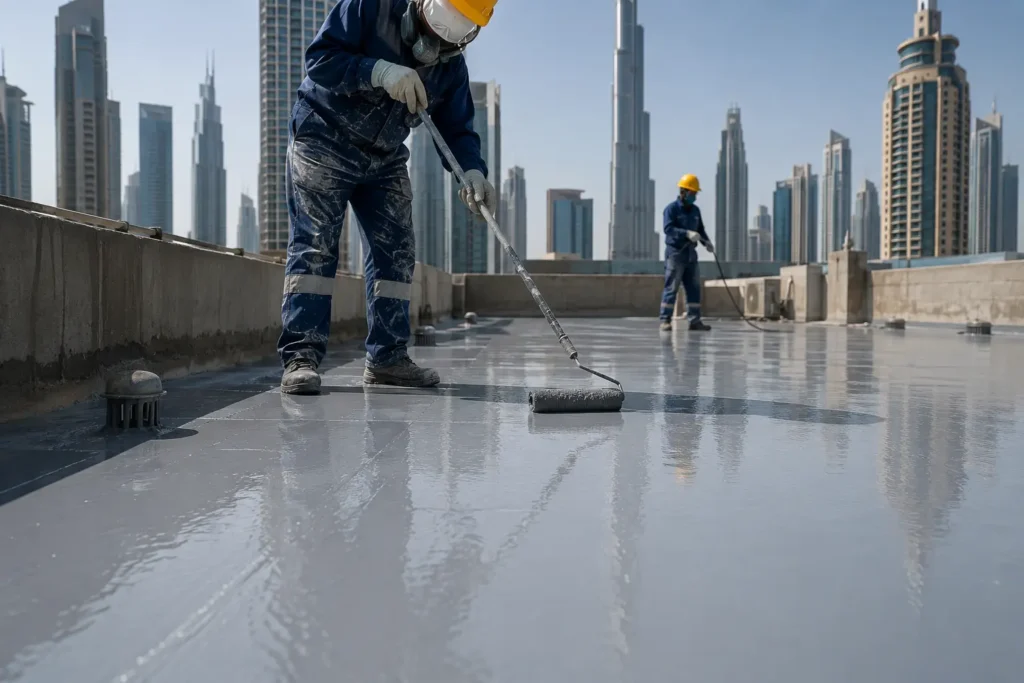
Polyurethane waterproof coatings 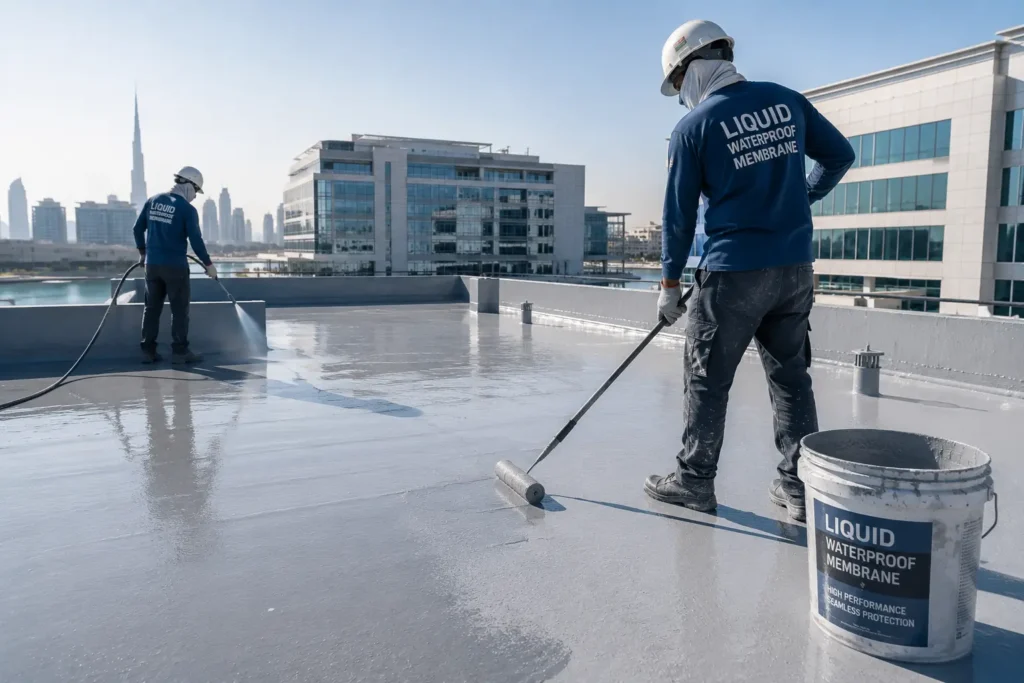
Liquid waterproof membranes 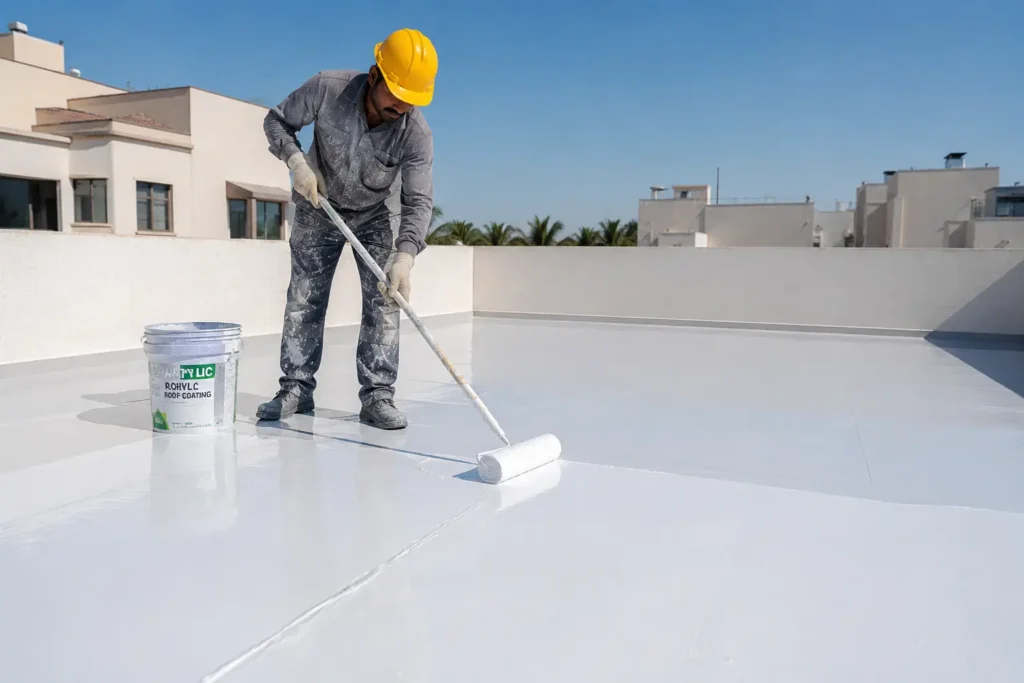
Acrylic waterproof coatings 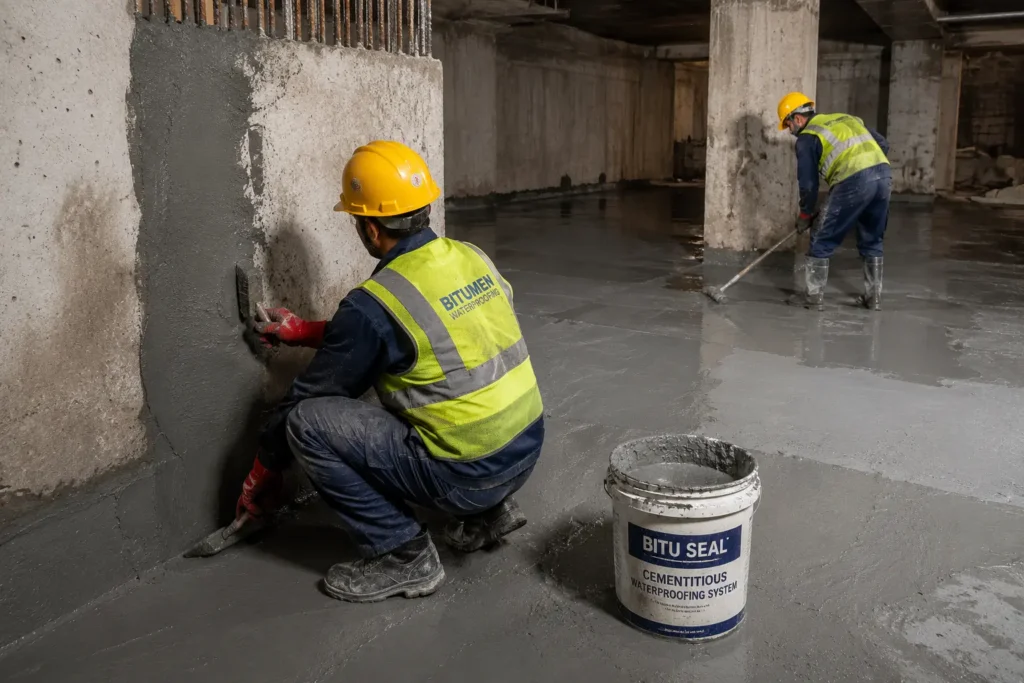
Cementitious waterproofing systems
Why Roof Waterproofing Is Important in Dubai?
Most villas and residential buildings in Dubai use flat roofing systems that are highly exposed to heat and weather conditions.
Over time, roofs can develop:
Waterproofing creates a protective barrier that prevents water penetration and extends the lifespan of the roof structure.
Proper waterproofing is essential for maintaining long-term roof performance in Dubai.
Key Benefits of Roof Waterproofing
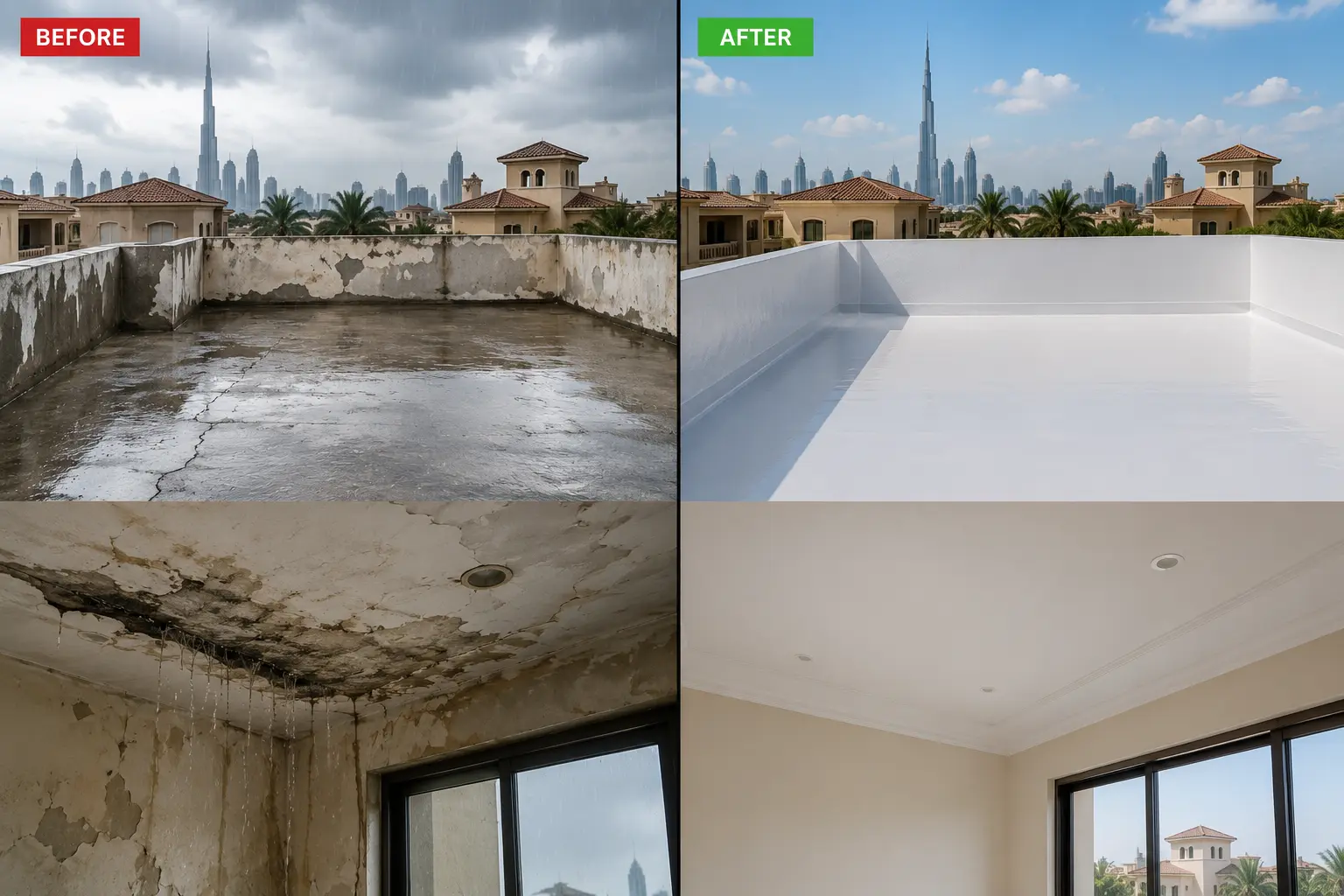
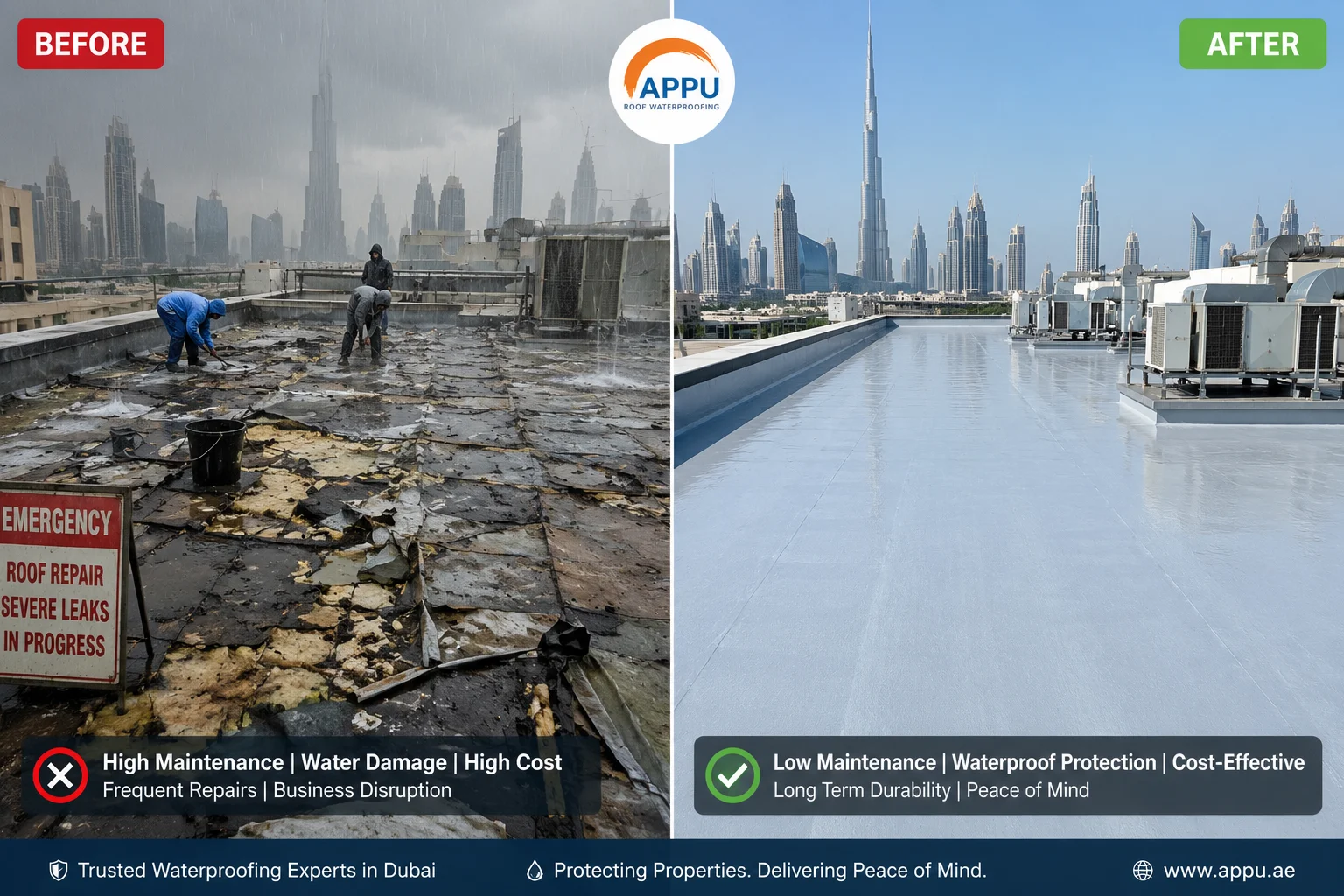
1. Prevents Roof Leaks and Water Damage
The biggest advantage of roof waterproofing is protection against water leakage.
Waterproof membranes help:
- Block water penetration
- Prevent ceiling damage
- Protect walls and insulation
- Reduce structural deterioration
Early waterproofing prevents costly repair work in the future.
2. Increases Roof Lifespan
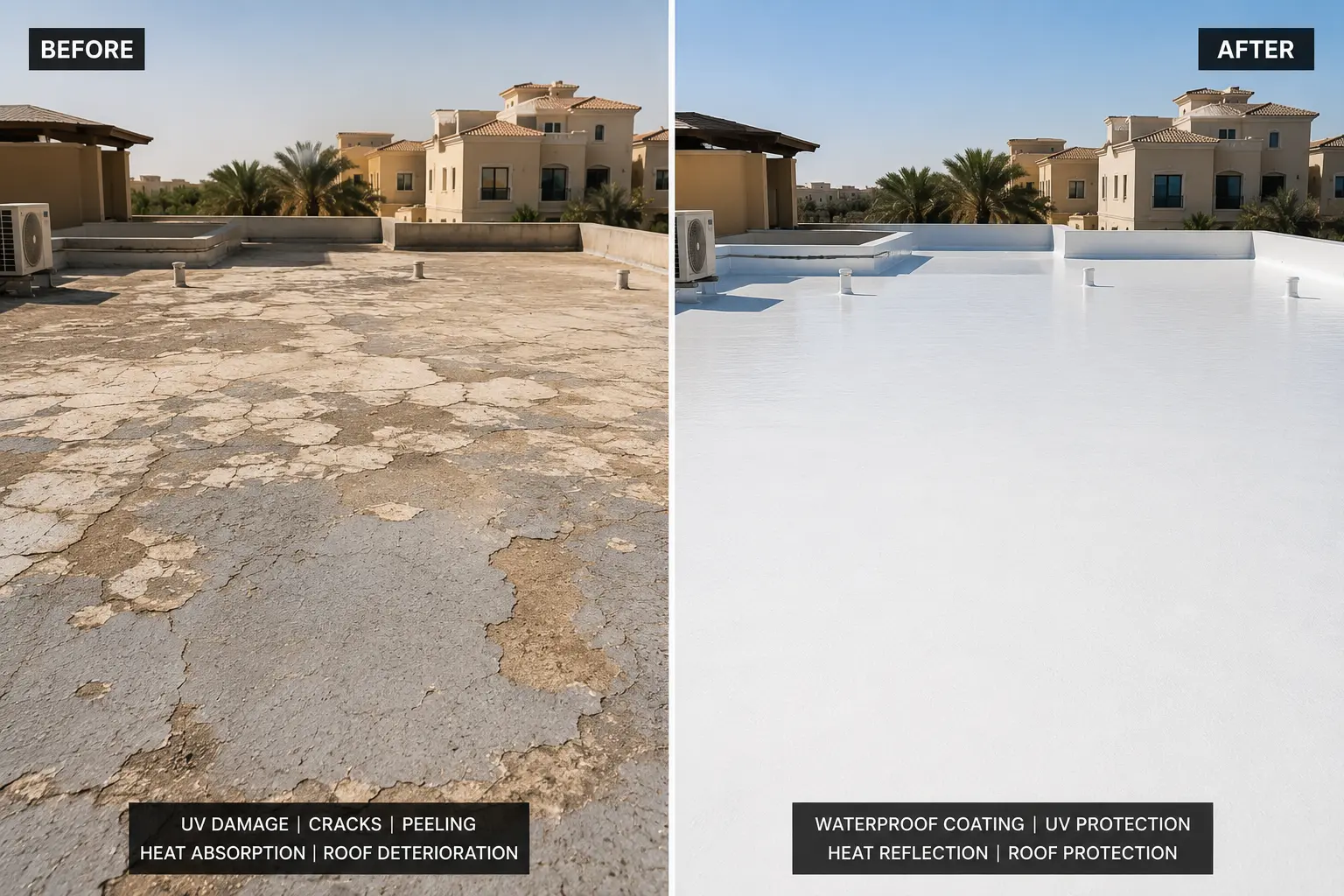
Dubai’s heat and UV exposure gradually weaken roofing materials.
Waterproof roofing solutions help:
- Reduce surface damage
- Protect roofing layers
- Minimize cracking
- Improve overall durability
Proper waterproofing can significantly extend roof lifespan.
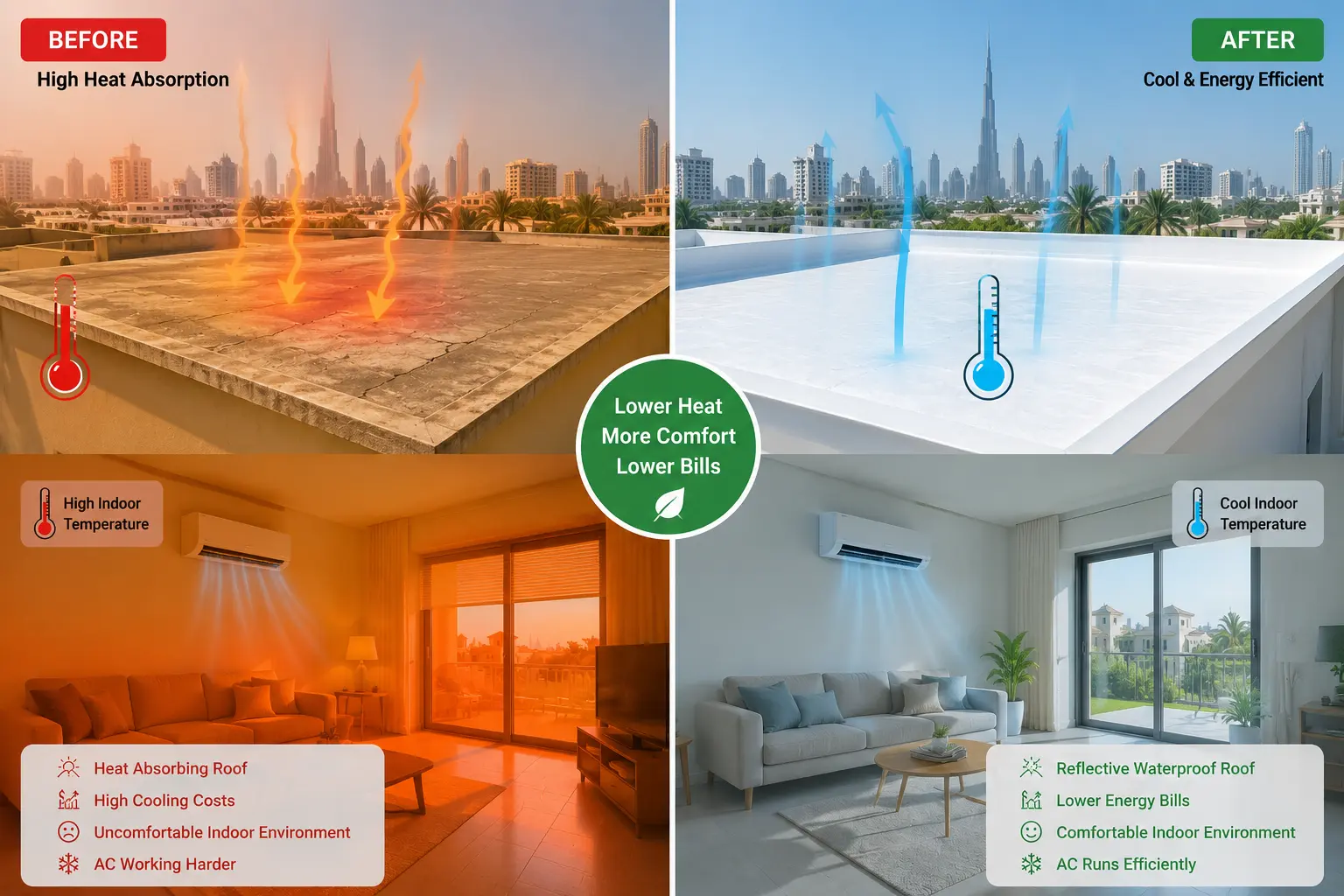
3. Improves Energy Efficiency
A damaged roof absorbs more heat, increasing indoor temperatures and AC usage.
Modern waterproof coatings often include:
- UV-resistant layers
- Heat-reflective surfaces
- Thermal insulation support
This helps:
- Reduce indoor heat buildup
- Lower cooling costs
- Improve energy efficiency
Waterproofed roofs perform better in Dubai’s hot climate.
4. Protects Structural Integrity
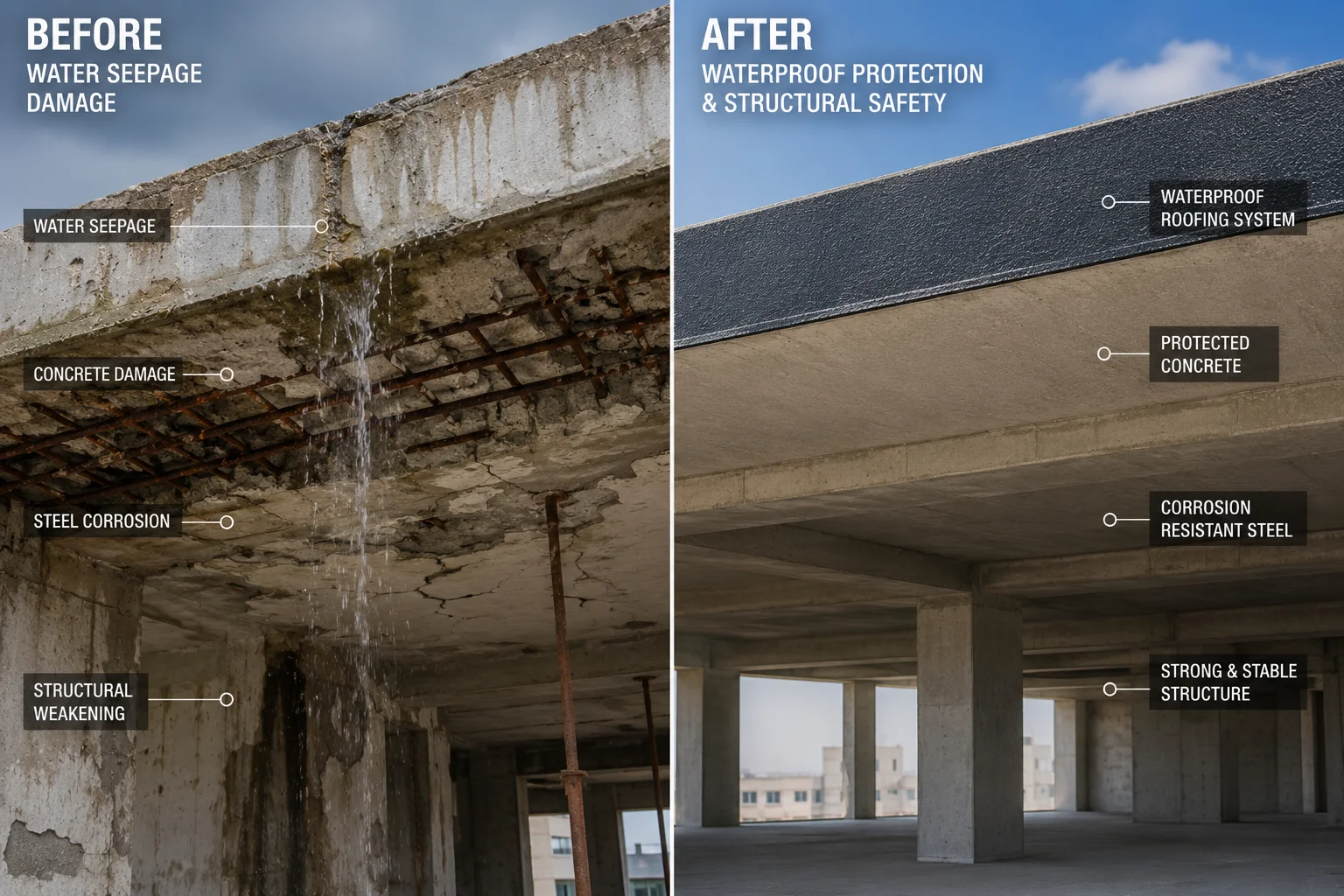
Water seepage can weaken:
- Concrete structures
- Roof slabs
- Steel reinforcement
- Interior walls
Over time, hidden moisture can create serious structural problems.
Waterproof roofing systems help maintain the long-term strength and stability of the building.
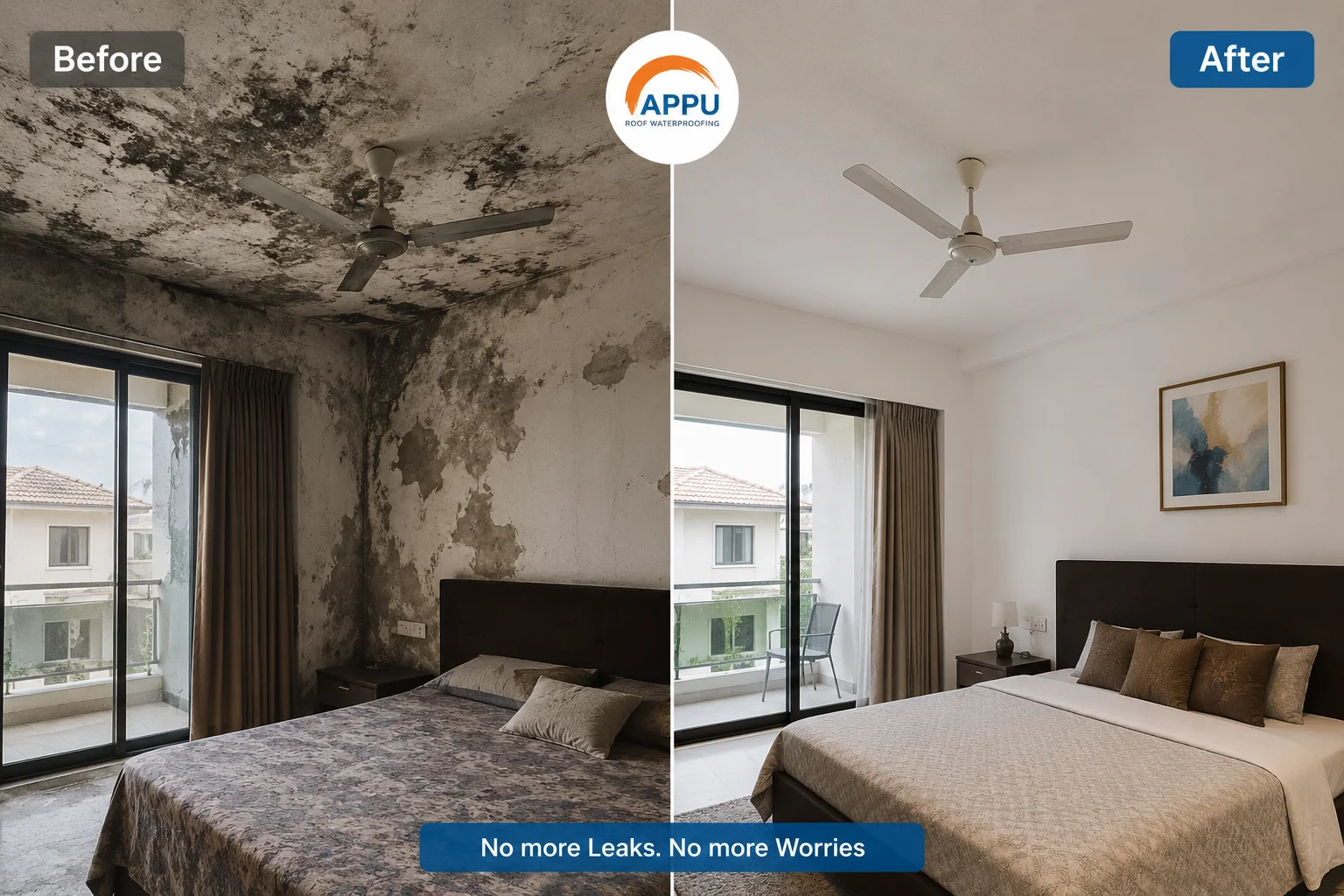
5. Prevents Mold and Dampness
Moisture trapped inside ceilings and walls creates the perfect environment for mold growth.
Waterproofing helps:
- Prevent damp surfaces
- Improve indoor air quality
- Reduce humidity-related damage
This is especially important for villas and residential properties.
6. Reduces Maintenance and Repair Costs
Preventive waterproofing reduces the need for frequent emergency repairs.
Regular waterproof maintenance helps avoid:
- Major roof leaks
- Structural repairs
- Interior water damage
- Waterproof membrane replacement
Long-term maintenance costs become much lower.
How Often Should Roof Waterproofing Be Inspected?
In Dubai, roofs should ideally be inspected:
Regular inspections help identify small problems before they become expensive repairs.
Why Professional Waterproofing Matters
Poor waterproofing installation can fail quickly in Dubai’s harsh climate.
Professional waterproofing contractors ensure:
High-quality materials and installation are essential for lasting results.
Conclusion:
Roof waterproofing is essential for protecting homes and villas in Dubai. With constant heat, UV exposure, humidity, and occasional rain, roofs require durable waterproof roofing solutions to maintain long-term performance.
Investing in professional waterproofing helps:
- Prevent roof leaks
- Improve energy efficiency
- Extend roof lifespan
- Protect property value
- Reduce roof maintenance costs
Whether you own a villa, townhouse, or commercial building, waterproof roofing systems provide long-term protection against Dubai’s challenging climate conditions.