
Why Roof Leaks Are Common in Dubai
Roofs in Dubai experience more environmental stress than many other regions.
Common causes include:
Flat roofs, which are common in Dubai villas and commercial buildings, are especially vulnerable when drainage or waterproofing systems fail.
Early Roof Leak Signs You Should Never Ignore
Identifying roof leak signs early is the best way to avoid major structural problems.
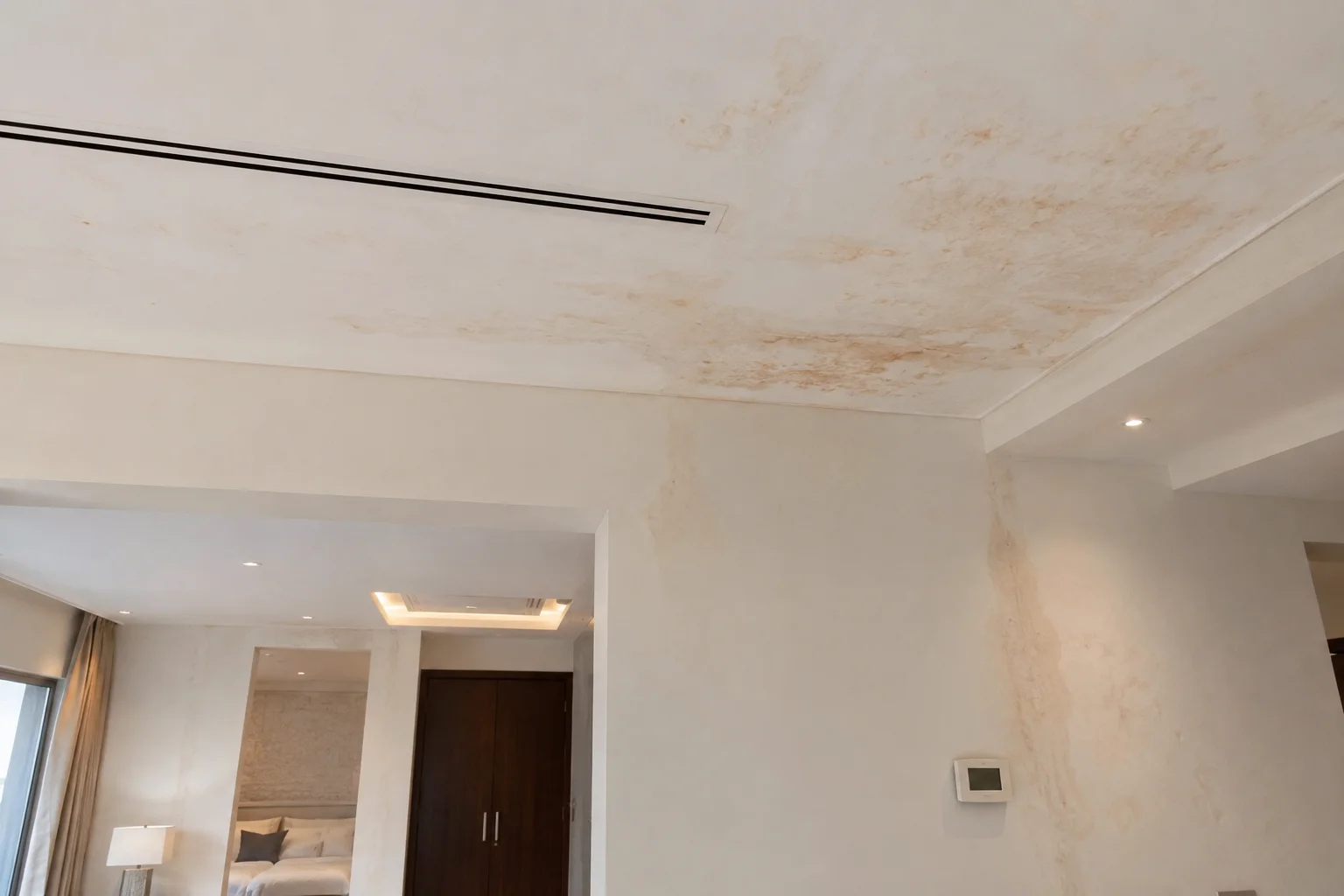
1. Water Stains on Ceilings or Walls
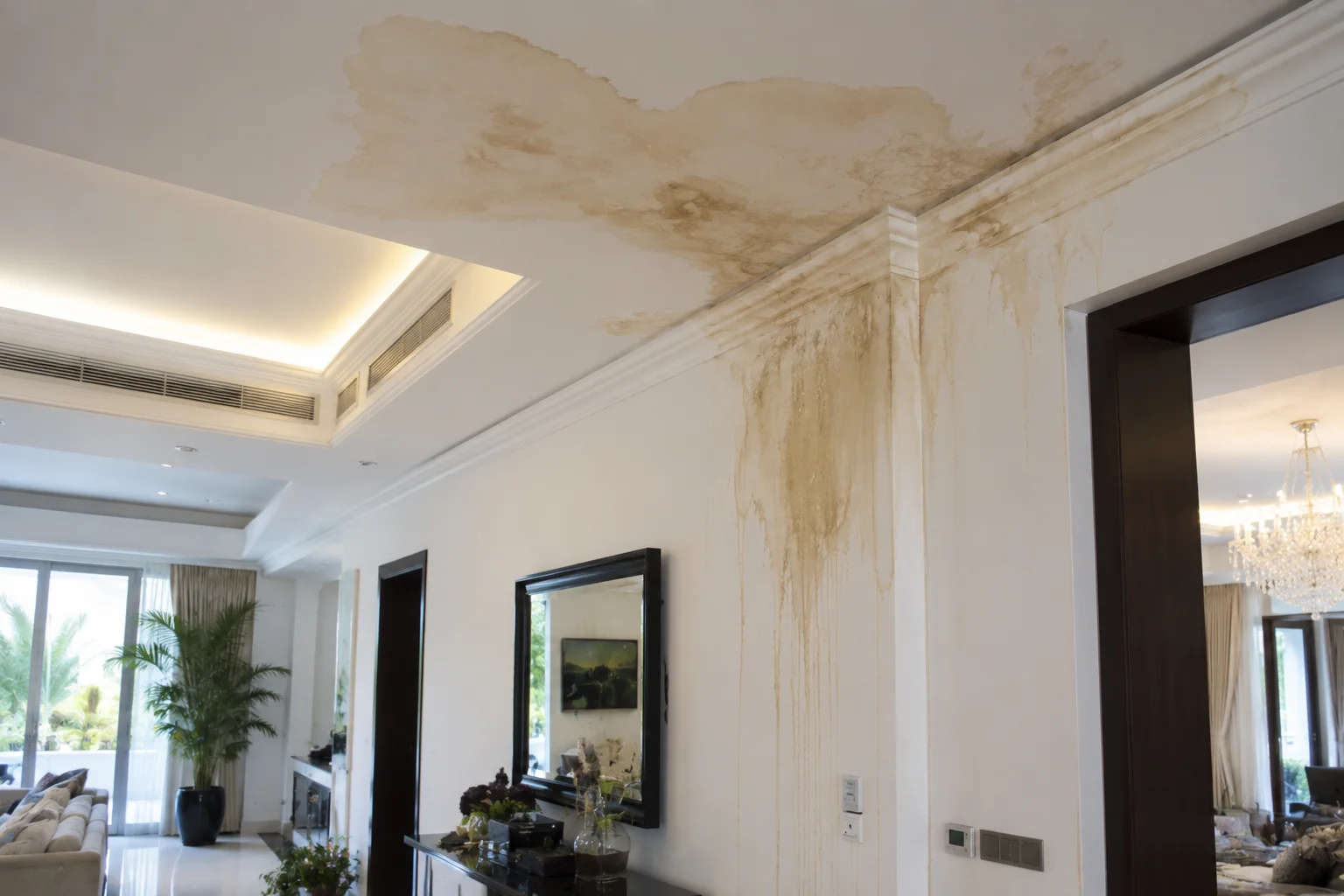
Brown or yellow stains are one of the first visible signs of water penetration.
These stains usually indicate:
- Damaged waterproofing layers
- Roof membrane failure
- Leaking roof joints
Even small stains can signal hidden moisture inside the structure.
2. Peeling Paint or Damp Walls
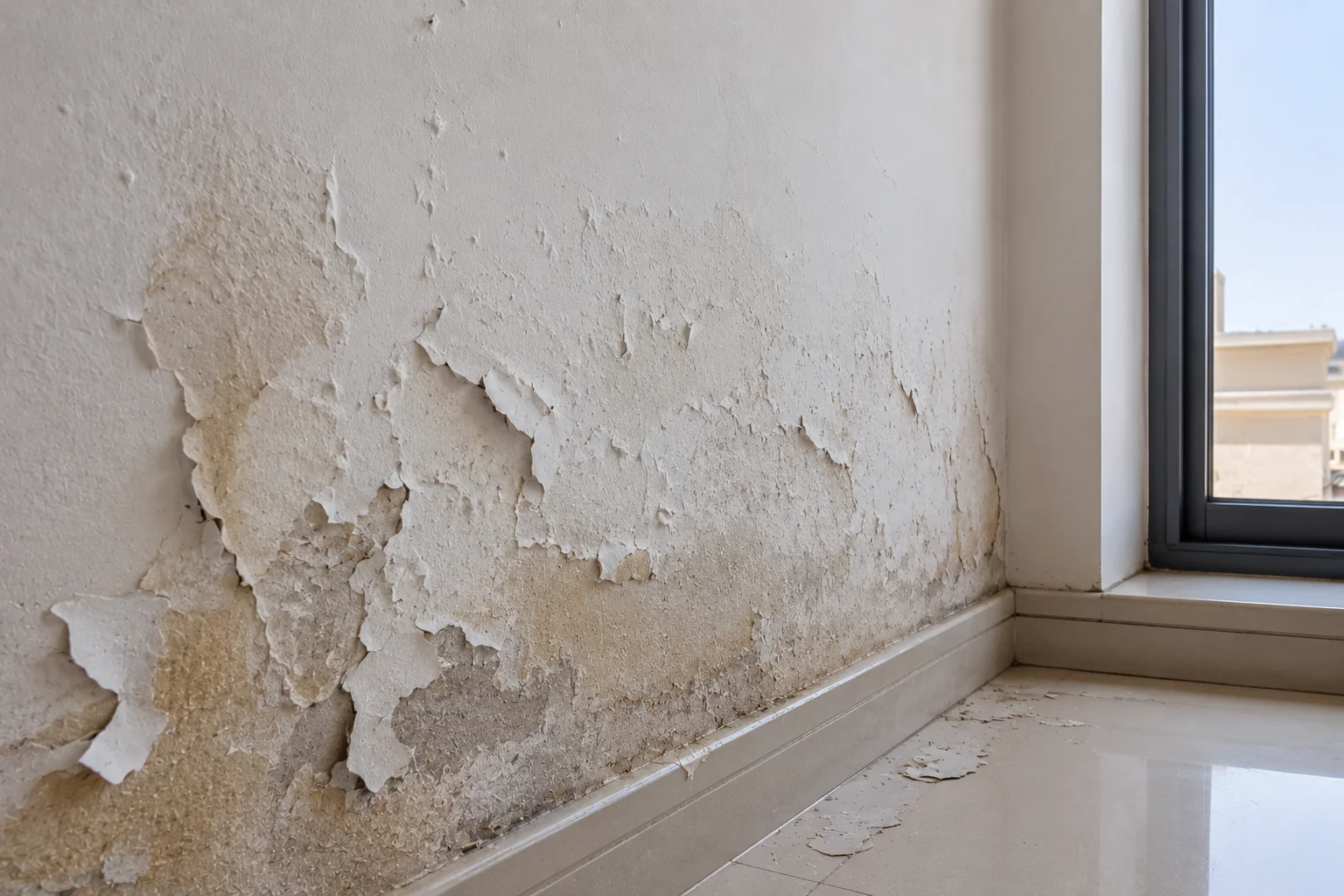
Excess moisture behind walls often causes paint to bubble, crack, or peel.
In Dubai properties, this is commonly linked to:
- Roof seepage
- Waterproofing failure
- Poor roof drainage
Metal roofs can significantly improve energy efficiency when combined with insulation systems.
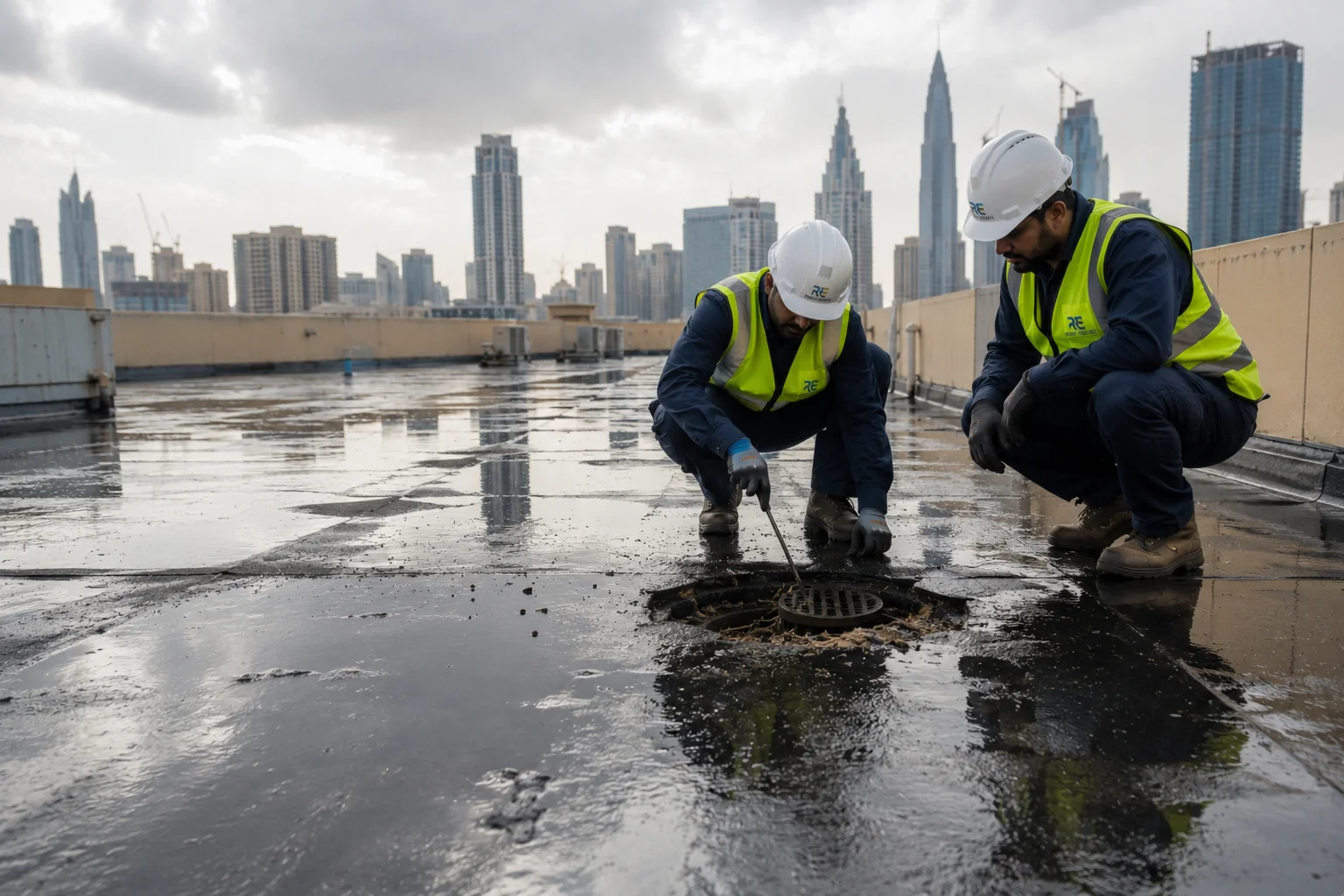
3. Water Pooling on Flat Roofs
Standing water is a major warning sign.
Flat roofing systems should drain water efficiently. When water remains on the surface for long periods, it increases pressure on:
- Waterproof membranes
- Roof joints
- Drainage outlets
Water pooling significantly increases leak risk.

4. Mold or Musty Smells
Persistent moisture inside a building creates the perfect environment for mold growth.
This usually indicates:
- Hidden roof leaks
- Trapped moisture in insulation
- Poor ventilation
Mold can affect both indoor air quality and structural integrity.
5. Cracks in Roofing or Waterproofing Layers
Heat expansion and UV exposure can cause roofing materials to crack over time.
Common problem areas:
- Roof corners
- Flashing areas
- AC unit penetrations
- Expansion joints
Small cracks often become major leaks during rainfall.
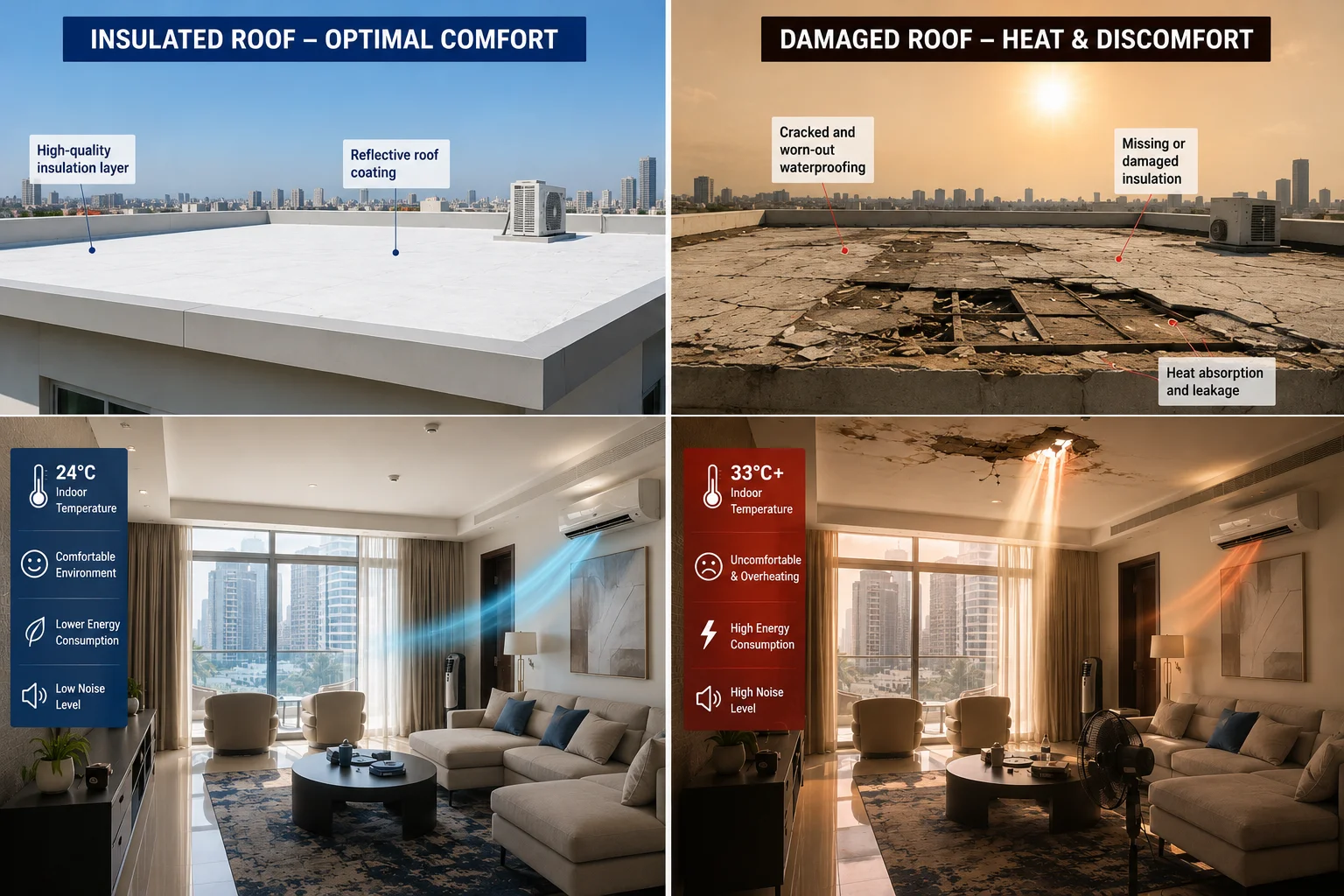
6. Increased Indoor Heat
A damaged roof can reduce insulation performance and increase indoor temperatures.
When waterproofing and insulation layers fail:
- Cool air escapes
- Heat enters more easily
- AC systems work harde
Sudden increases in cooling costs may indicate roofing problems
What Causes Roof Waterproofing Failure?
Waterproofing systems protect roofs from water penetration, but over time they can deteriorate due to Dubai’s harsh weather conditions.
Common causes include:
Modern waterproofing systems, such as:

They are designed to improve long-term roof protection when properly maintained.
Recommended Roof Maintenance Tips
How to Prevent Expensive Roof Repairs?
Preventive maintenance is always cheaper than emergency repairs.
Schedule Regular Roof Inspection

Annual inspections help identify:
- Cracks
- Drainage issues
- Waterproofing damage
Keep Drainage Systems Clean
Blocked drainage systems cause water pooling and increase leak risk.
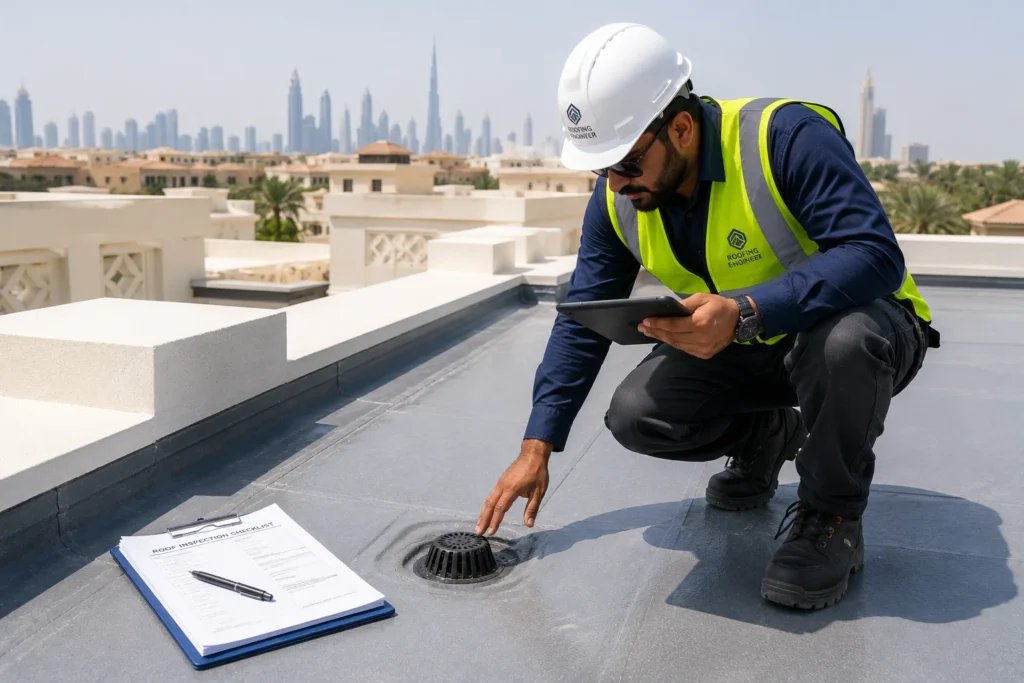
Regular cleaning prevents:
- Water buildup
- Membrane stress
- Structural damage
Repair Small Cracks Immediately
Minor cracks can quickly expand under heat exposure.
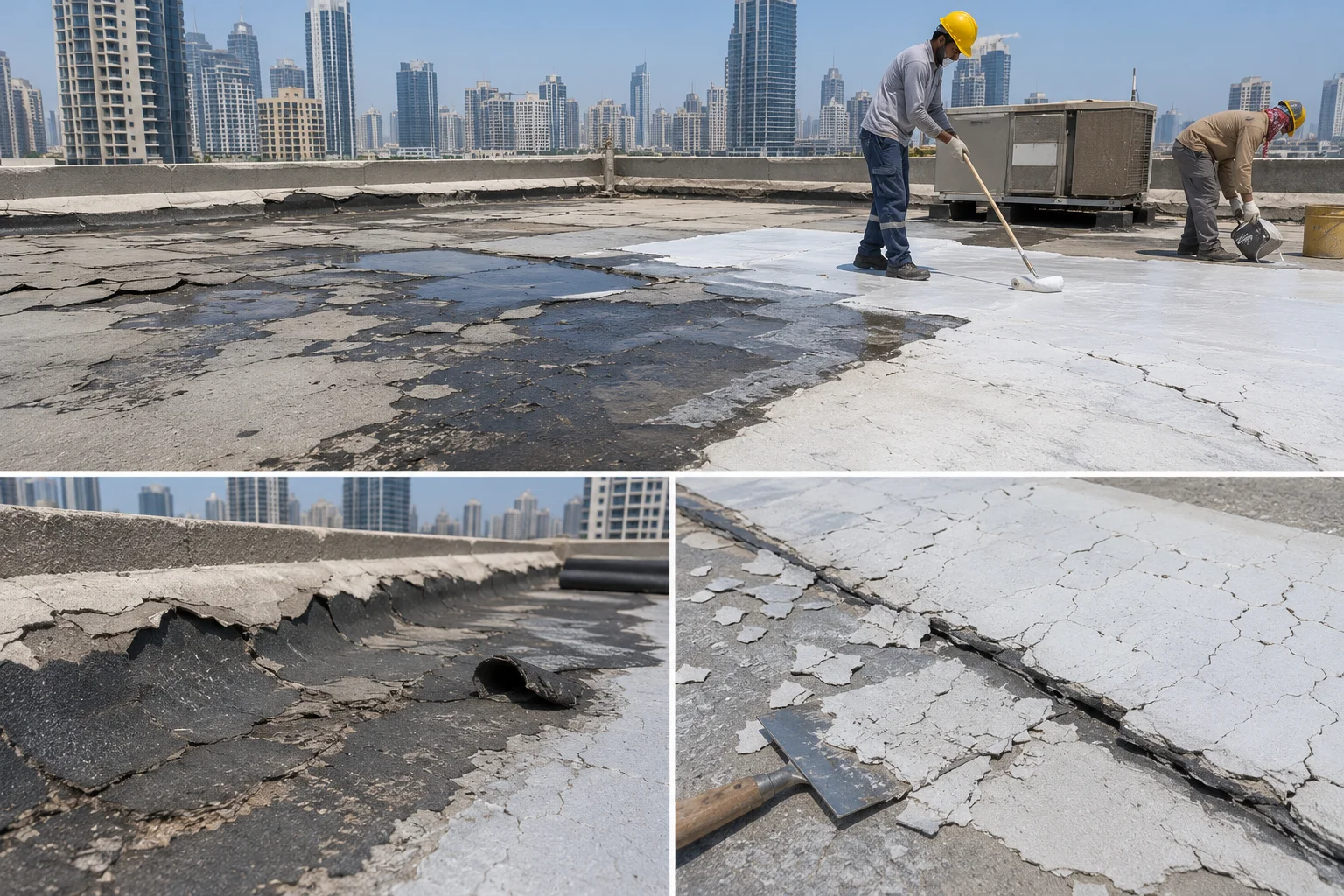
Early repair helps:
- Prevent water seepage
- Protect insulation
- Extend roof lifespan
Maintain Waterproofing Systems
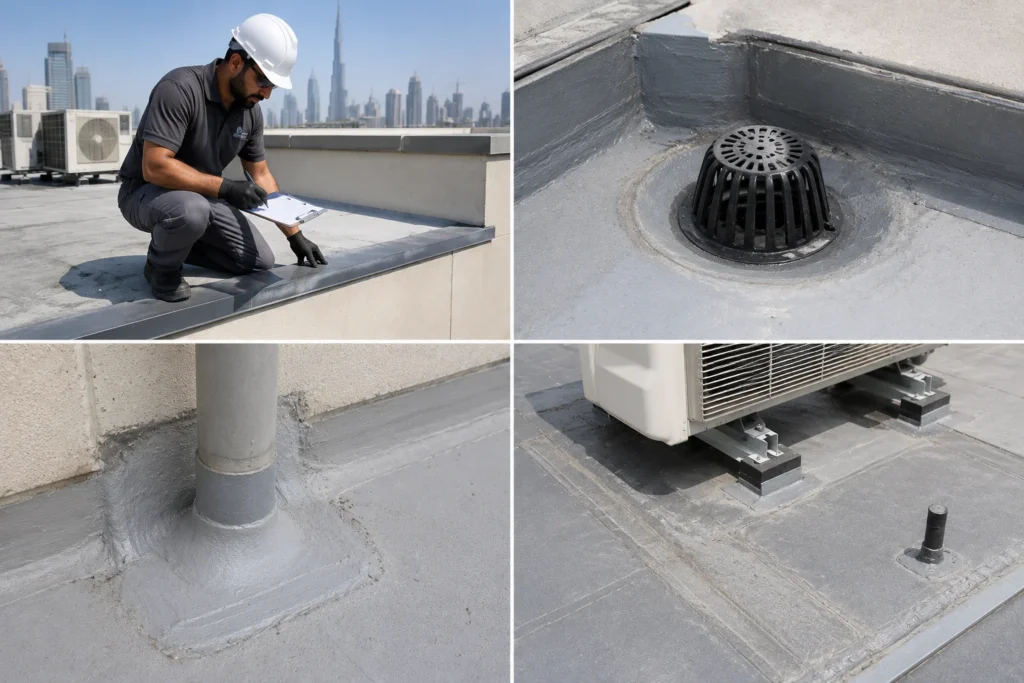
Waterproof coatings and membranes should be inspected regularly to ensure continued protection.
When Should You Call a Roofing Professional?
You should contact a roofing specialist if you notice:
Persistent water stains
Repeated leaks
Standing water
Damp ceilings or walls
Visible roof cracks
Professional roof inspections can identify hidden problems before they become major structural issues.
Final Thoughts
Roof leaks are one of the most common roofing problems in Dubai, but they rarely happen overnight. Most leaks start with small warning signs that can be detected early with proper inspection and maintenance.
By paying attention to:
- Water stains
- Cracks
- Drainage problems
- Waterproofing damage
property owners can avoid expensive repairs and extend the lifespan of their roofing system
Whether you own a villa, warehouse, or commercial building, proactive roof maintenance is the key to long-term protection in Dubai’s extreme climate.