
Why Solar Roofing Is Important in Dubai
Dubai experiences extremely high temperatures for much of the year. As a result, cooling costs can become one of the largest monthly expenses for property owners.
Traditional roofs absorb heat, causing:
Solar energy roofing systems help offset electricity consumption while reducing the overall heat impact on buildings.
This makes solar roofing both an energy-saving and environmentally friendly solution.
How Solar Roofing Reduces Energy Bills
1. Generates Renewable Electricity
Solar panels convert sunlight into electricity that can power:
These stains usually indicate:
- Air conditioning systems
- Lighting
- Appliances
- Commercial equipment
This reduces dependence on grid electricity and lowers monthly utility costs.
Dubai’s strong sunlight allows solar systems to generate significant energy throughout the year.


2. Reduces Heat Absorption
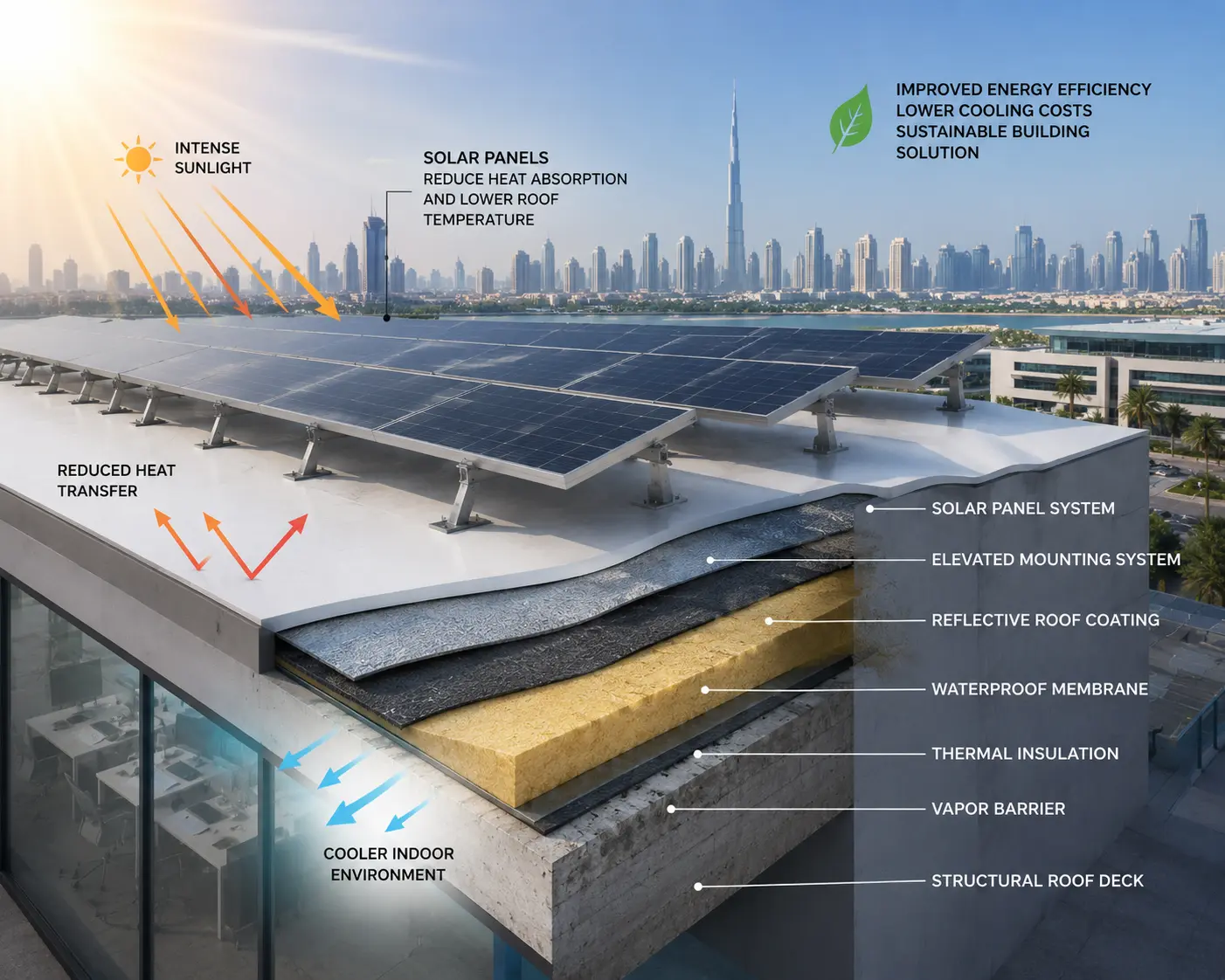
Solar panels create a protective layer above the roof surface, helping reduce direct heat exposure.
This helps:
- Lower roof surface temperature
- Reduce indoor heat buildup
- Improve thermal performance
Cooler roofs require less air conditioning, which reduces energy consumption.
3. Improves Overall Energy Efficiency
Modern solar roofing systems work best when combined with:
- Waterproof roofing solutions
- Thermal insulation
- Reflective roof coatings
This combination improves building efficiency and minimizes energy waste. Energy-efficient roofing systems are becoming increasingly important for Dubai properties.
Benefits of Solar Energy Roofing UAE
Lower Electricity Bills
The biggest advantage of solar roofing is long-term energy savings.
Property owners can reduce:
- Monthly electricity costs
- Peak cooling expenses
- Dependence on traditional energy sources
Environmentally Friendly Energy
Solar roofing helps reduce carbon emissions and supports sustainable energy goals in the UAE.
Clean solar energy reduces:
- Fossil fuel dependence
- Environmental impact
- Energy waste
Increased Property Value
Energy-efficient properties are becoming more attractive to buyers and investors in Dubai.
Solar roofing can:
- Improve property appeal
- Increase resale value
- Enhance long-term investment potential
Long-Term Roof Protection
Solar panels help shield roofing surfaces from:
- Direct UV exposure
- Extreme heat
- Weather-related wear
This can help extend roof lifespan when combined with proper waterproofing systems.
Best Properties for Solar Roofing in Dubai
Solar roofing is ideal for:
Villas
Residential buildings
Commercial properties
Warehouses
Industrial facilities
Important Components of Solar Roofing Systems
A high-quality solar roofing system usually includes:
Convert sunlight into electricity.
Protect the roof structure from water penetration.
Helps reduce indoor heat transfer.
Securely attach solar panels to the roof surface.
Convert solar energy into usable electricity.
How Waterproofing Supports Solar Roofing
Waterproofing is an essential part of any solar roofing system in Dubai.
Without proper waterproofing:
- Water leaks may occur
- Roof membranes can deteriorate
- Structural damage may develop
Professional waterproof roofing solutions help ensure:
- Leak protection
- Long-term durability
- Safe solar installation
Solar systems should always be installed with proper roofing and waterproofing support.
How Long Do Solar Roofing Systems Last?
Most solar roofing systems last:
Signs Your Property Is Ready for Solar Roofing
Your property may benefit from solar roofing if you experience:
High electricity bills
Excessive indoor heat
Large unused roof space
Rising cooling costs
Professional roof inspections help determine whether a roof is suitable for solar panel installation.
Why Professional Installation Matters
Professional installation ensures:
Poor installation can lead to:
Choosing experienced roofing and solar specialists is essential.
Conclusion:
Solar roofing is one of the most effective ways to reduce energy bills in Dubai. With abundant sunlight, high cooling demands, and growing interest in sustainable construction, solar energy roofing UAE provides long-term financial and environmental benefits.
By combining:
- Solar panels
- Waterproof roofing systems
- Thermal insulation
- Energy-efficient materials
Property owners can improve building performance while lowering electricity costs.
Whether for villas, warehouses, or commercial buildings, solar roofing offers a smart long-term investment for properties across Dubai and the UAE.