
How to Prevent Roof Damage in Dubai Heat?
Preventive maintenance is the best way to protect your roof from Dubai’s harsh climate.
Recommended roof maintenance practices:
Professional roofing inspections can identify early signs of damage before they become serious structural issues.
1. Roof Cracks and Surface Damage
One of the most common forms of roof damage Dubai heat causes is cracking. Prolonged exposure to sunlight dries out roofing materials, especially waterproof membranes and sealants.
As the material becomes brittle, small cracks begin to appear. These cracks allow water seepage during rainfall, leading to leaks and moisture damage inside the building.
Common signs include:
- Visible roof cracks
- Peeling roof coating
- Damaged waterproof layers
- Bubbling surfaces
Flat roofs in Dubai are especially vulnerable because they absorb more direct heat throughout the day.

2. Waterproofing Failure
Roof waterproofing systems are essential in Dubai properties. However, continuous UV exposure can weaken waterproof membranes over time.
When waterproofing fails, water starts penetrating the roof slab during rain or AC condensation buildup. This can damage ceilings, insulation, walls, and electrical systems.
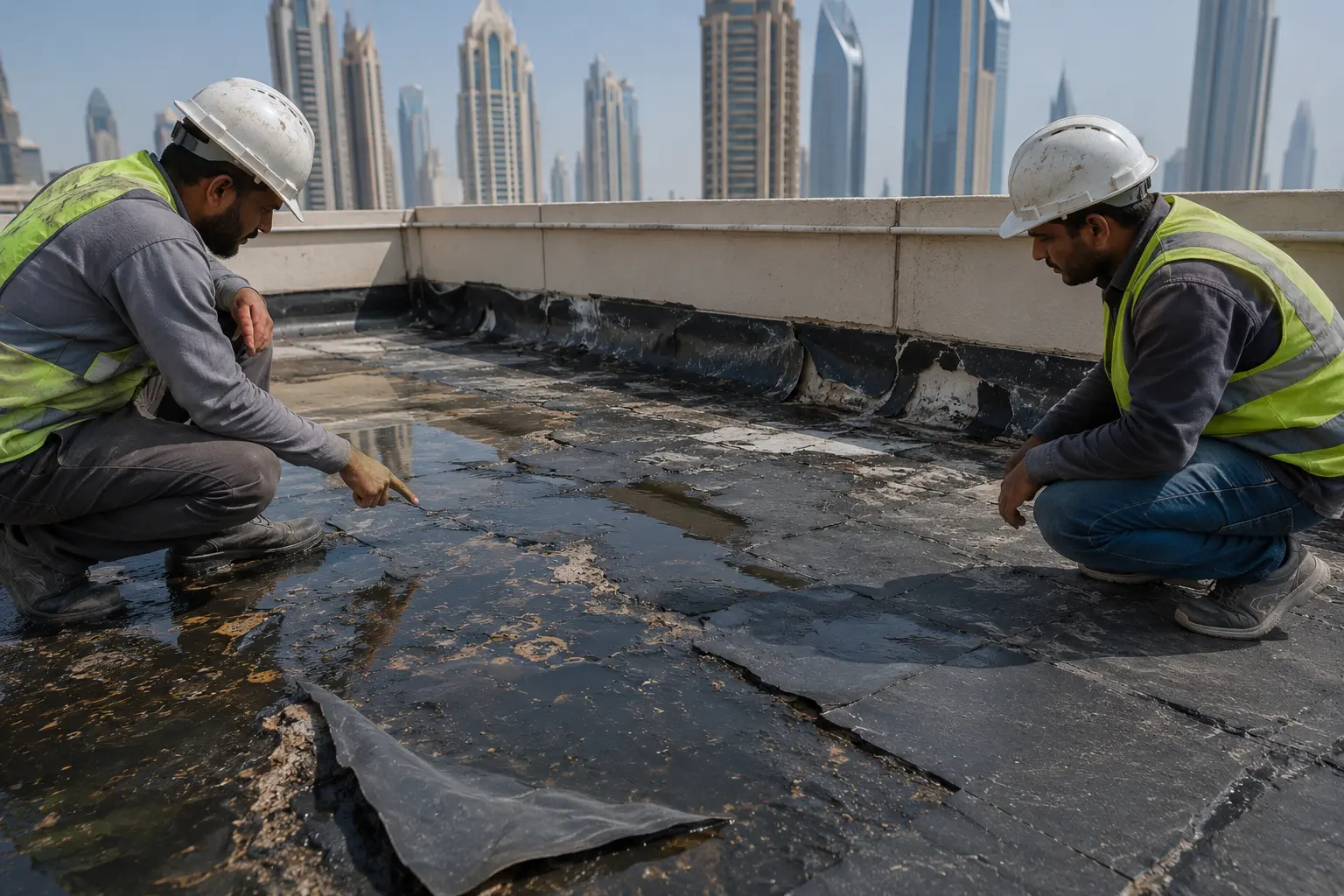
Causes of waterproofing failure:
- Heat-induced expansion
- UV degradation
- Poor installation quality
- Aging roofing materials
Professional roof waterproofing maintenance is crucial to avoid costly structural repairs.
3. Roof Leaks During Rainfall
Many property owners assume roof leaks only happen because of rain. In reality, heat damage is often the root cause.
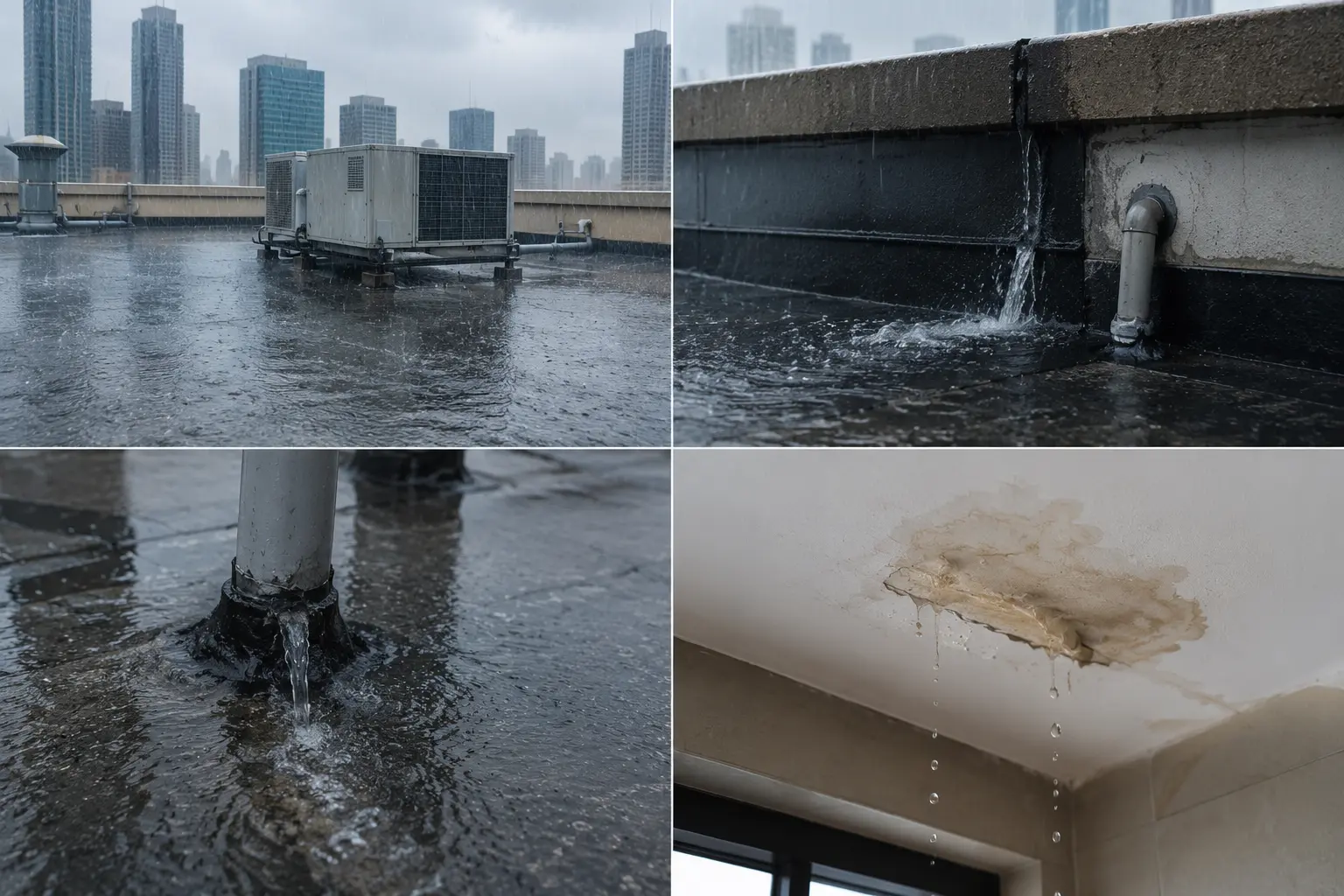
Dubai heat creates cracks and weak points in the roofing system. Once rain arrives, water easily enters through these damaged areas.
Common leak locations:
- Roof joints
- Flashing areas
- AC pipe openings
- Drainage sections
- Skylight edges
Ignoring early signs of leakage can lead to mold growth and interior damage
4. Thermal Expansion and Roof Movement
Extreme heat causes roofing materials to expand significantly during daytime temperatures. At night, they contract as temperatures drop.

This repeated expansion and contraction is called thermal movement. Over time, it weakens:
- Roof joints
- Fasteners
- Adhesives
- Waterproof coatings
Metal roofs, concrete roofs, and flat roofing systems in Dubai are all affected by thermal stress. Without proper roof maintenance, these movements eventually create structural weaknesses.
5. Ponding Water on Flat Roofs
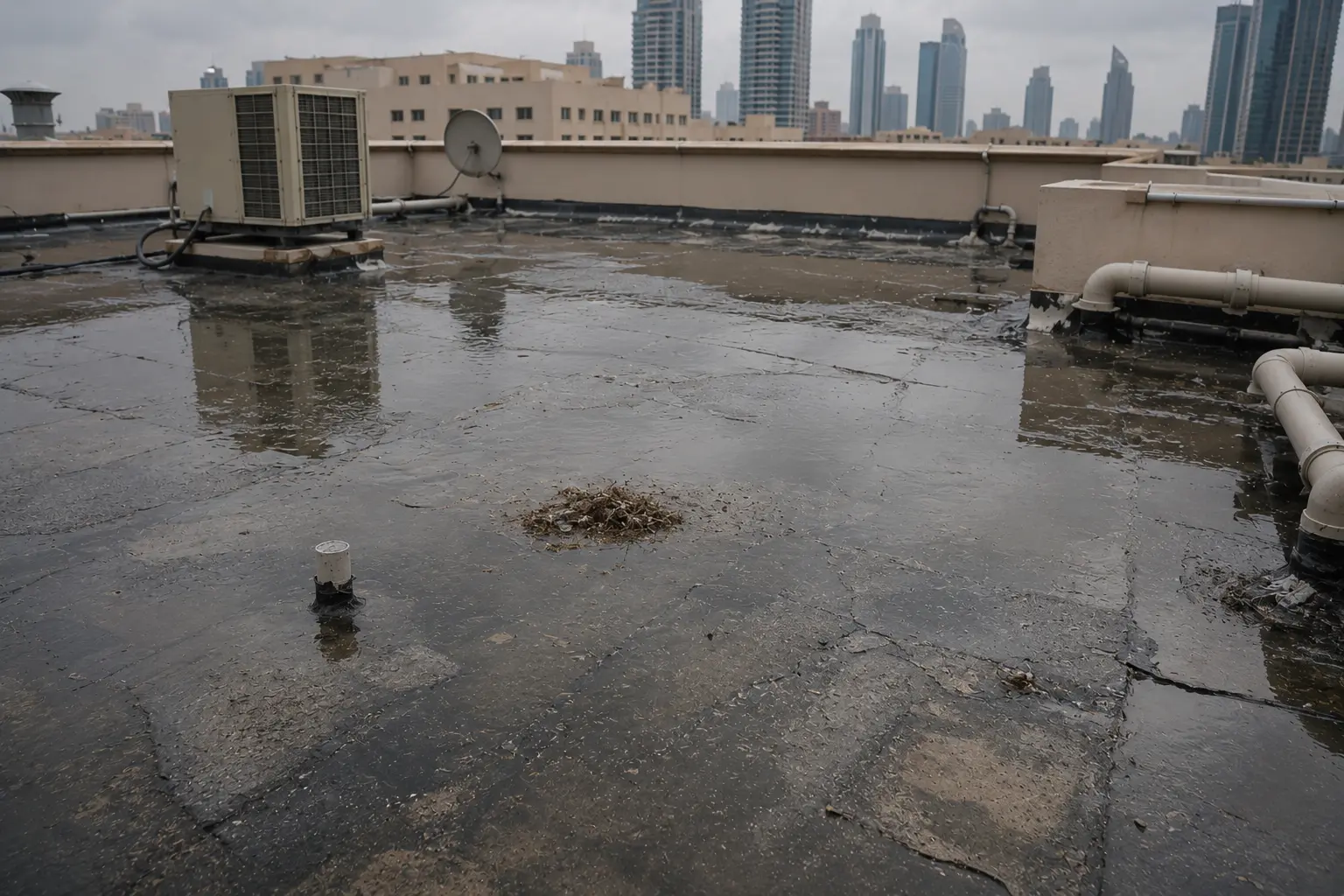
Flat roofs are widely used across Dubai buildings. However, improper drainage combined with heat-related roof sagging can lead to ponding water.
Ponding occurs when water remains on the roof surface for extended periods instead of draining properly.
Risks of ponding water:
- Accelerated membrane damage
- Roof leaks
- Mold growth
- Structural weakening
- Increased roof load
Heat softens some roofing materials, making flat roofs more vulnerable to water retention problems.
6. Damaged Roof Insulation
Roof insulation plays a major role in maintaining indoor temperatures and reducing energy costs. However, Dubai’s heat can gradually damage insulation materials.

Solar roofing systems work best when integrated with:
- Heat-resistant roofing materials
- Waterproofing systems
- Proper insulation layers
Poor insulation performance is often a hidden consequence of roof damage Dubai heat conditions.
7. UV Radiation Damage
Dubai receives extremely high levels of ultraviolet radiation throughout the year. UV rays continuously attack roofing materials and protective coatings.
UV damage can cause:
- Fading surfaces
- Material brittleness
- Membrane shrinkage
- Coating breakdown
- Surface chalking
Even high-quality roofing systems require periodic inspections to withstand long-term UV exposure

8. Sand and Dust Accumulation
Dubai sandstorms may seem harmless, but dust buildup can seriously affect roofing systems.

Accumulated sand:
- Blocks drainage systems
- Traps moisture
- Damages roof coatings
- Increases roof surface temperature
When drains become clogged, rainwater cannot flow properly, increasing the risk of roof leaks and water damage. Regular roof cleaning is essential in Dubai’s desert environment.
9. AC-Related Roof Problems
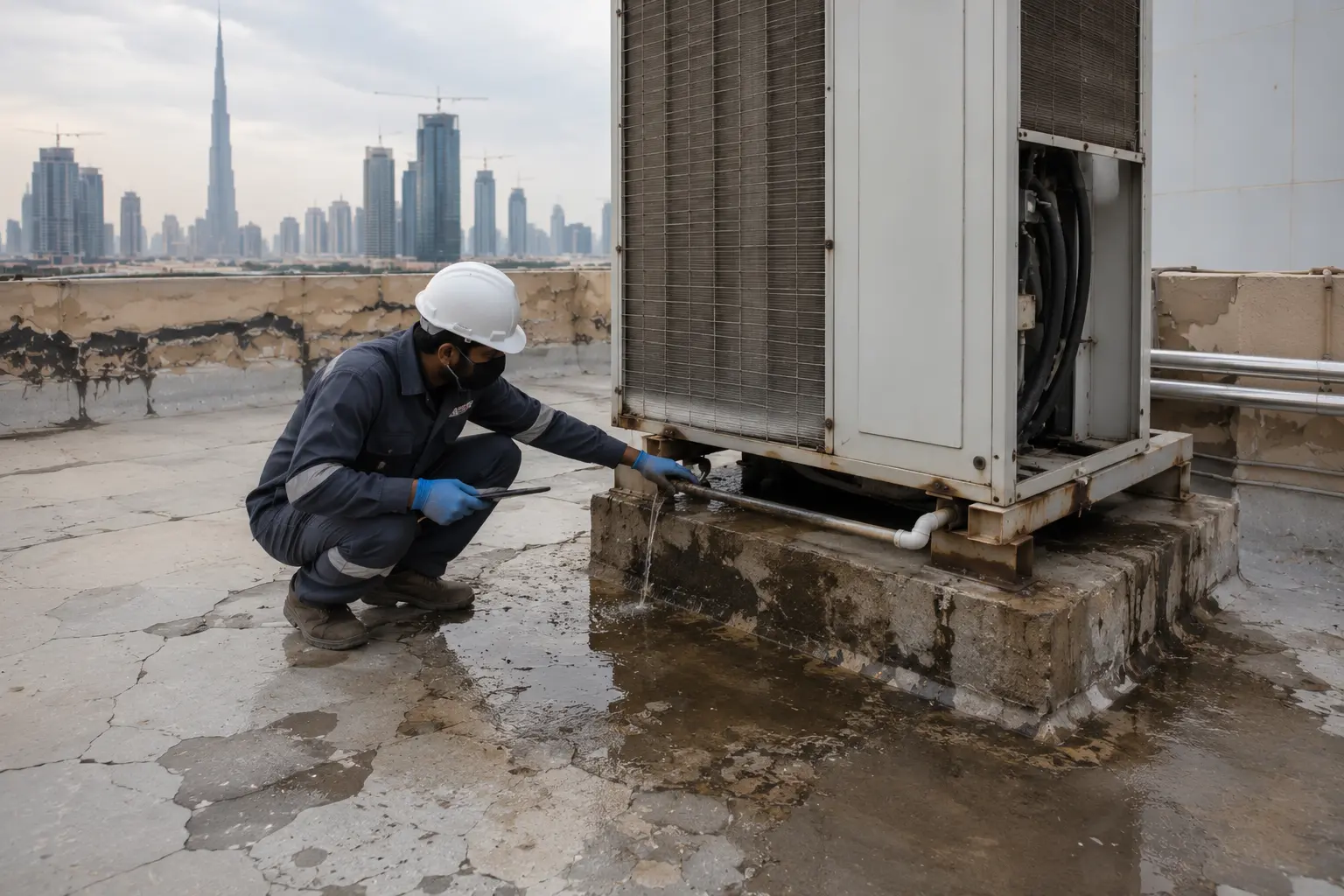
Air conditioning systems run heavily throughout Dubai summers. Rooftop AC units can contribute to roofing issues when not properly maintained.
Common AC-related roofing problems:
- Water leakage from drain lines
- Damaged waterproofing around units
- Roof penetrations cracking
- Condensation buildup
Improper AC installation often leads to hidden roof water damage over time.
10. Premature Roof Aging
The combination of extreme heat, UV rays, humidity, and dust significantly reduces roof lifespan in Dubai.
A roof that may last 25 years in cooler climates might require major repairs much earlier in the UAE.

Factors accelerating roof aging:
- Lack of maintenance
- Low-quality materials
- Poor waterproofing
- Infrequent inspections
- Heat stress
Routine maintenance helps extend roof durability and reduce long-term repair costs.
Best Roofing Materials for Dubai Climate
Choosing the right roofing material is essential for long-term performance in UAE weather conditions.
Popular heat-resistant roofing solutions:
TPO roofing membranes
EPDM rubber roofing
Reflective roof coatings
Polyurethane waterproofing
Concrete roof systems with insulation
Energy-efficient roofing systems can also help lower indoor cooling costs.
When to Call a Professional Roofing Contractor
Some roofing issues are difficult to detect without professional equipment and expertise. If you notice water stains, ceiling dampness, rising energy bills, or visible roof cracks, it is important to contact experienced roofing specialists.
Professional roofing contractors can:
Early repairs are always more affordable than a complete roof replacement.
Final Thoughts
Roof damage caused by Dubai heat is a common challenge for both residential and commercial properties. Constant exposure to extreme temperatures, UV rays, sand, and humidity can weaken roofing systems over time.
Regular inspections, preventive maintenance, and professional waterproofing services are essential for protecting your property and avoiding expensive repairs.
If you want to extend your roof’s lifespan and improve building protection, investing in proper roofing maintenance in Dubai is one of the smartest long-term decisions.